
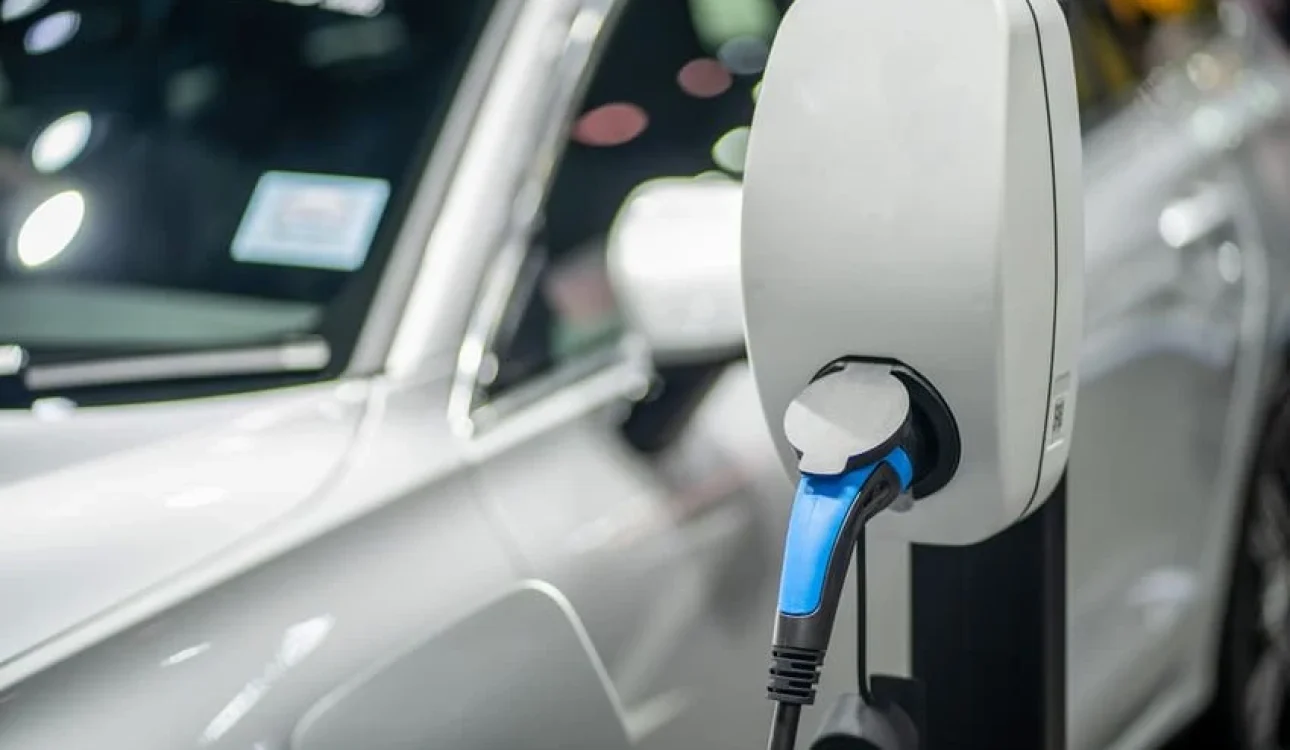

An in-car charger (onboard charger) converts AC power to DC for your EV's battery. Its capacity (typically 3.7-22kW) limits your AC charging speed regardless of how powerful your home charging station is, significantly affecting your daily charging experience.
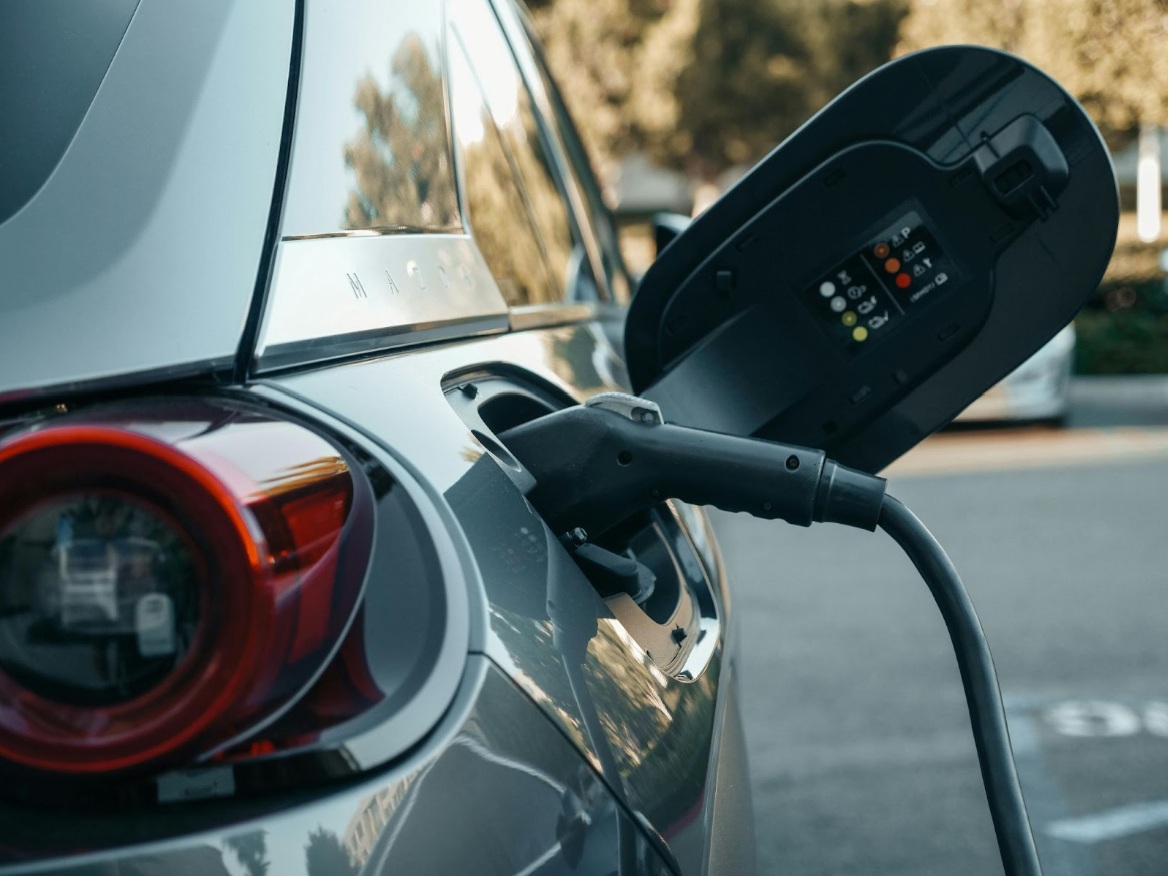
Buying an electric vehicle means entering a world of kilowatts, charging rates, and battery capacities. But one crucial component often gets overlooked: the in-car charger. This hidden device significantly impacts how quickly your EV charges, regardless of the fancy wall box you’ve installed at home.
Key Takeaways
- Your EV’s onboard charger capacity (not your wall box) determines maximum AC charging speed, typically ranging from 3.7kW to 22kW.
- DC fast chargers bypass the onboard charger limitation, delivering power directly to your battery at much higher rates (50-350kW).
- Match your home charger to your car’s onboard charger capacity to avoid overspending on equipment your vehicle can’t fully utilise.
What Is an In-Car Charger in an Electric Vehicle?
The in-car charger (officially called the onboard charger or OBC) is a component built into your electric vehicle that many owners don’t realise exists. It’s not the cable you plug in or the wall-mounted unit in your garage.
This device sits tucked away inside your car’s electrical system and performs a critical function: converting alternating current (AC) from external sources like home wall boxes into direct current (DC) that your car’s battery can store.
Modern electric vehicles come with various onboard charger capacities, typically ranging from 3.7kW in entry-level models to 7kW or 11kW in mid-range and premium vehicles. Some high-end EVs offer even more powerful onboard chargers.
The capacity of this hidden component determines the maximum AC charging speed your vehicle can accept, regardless of how powerful your home charging station might be.
How an In-Car Charger Affects EV Charging Speed
Here’s where things get interesting. Your in-car charger creates a charging speed ceiling that cannot be exceeded when using AC charging. This limitation often catches new EV owners by surprise.
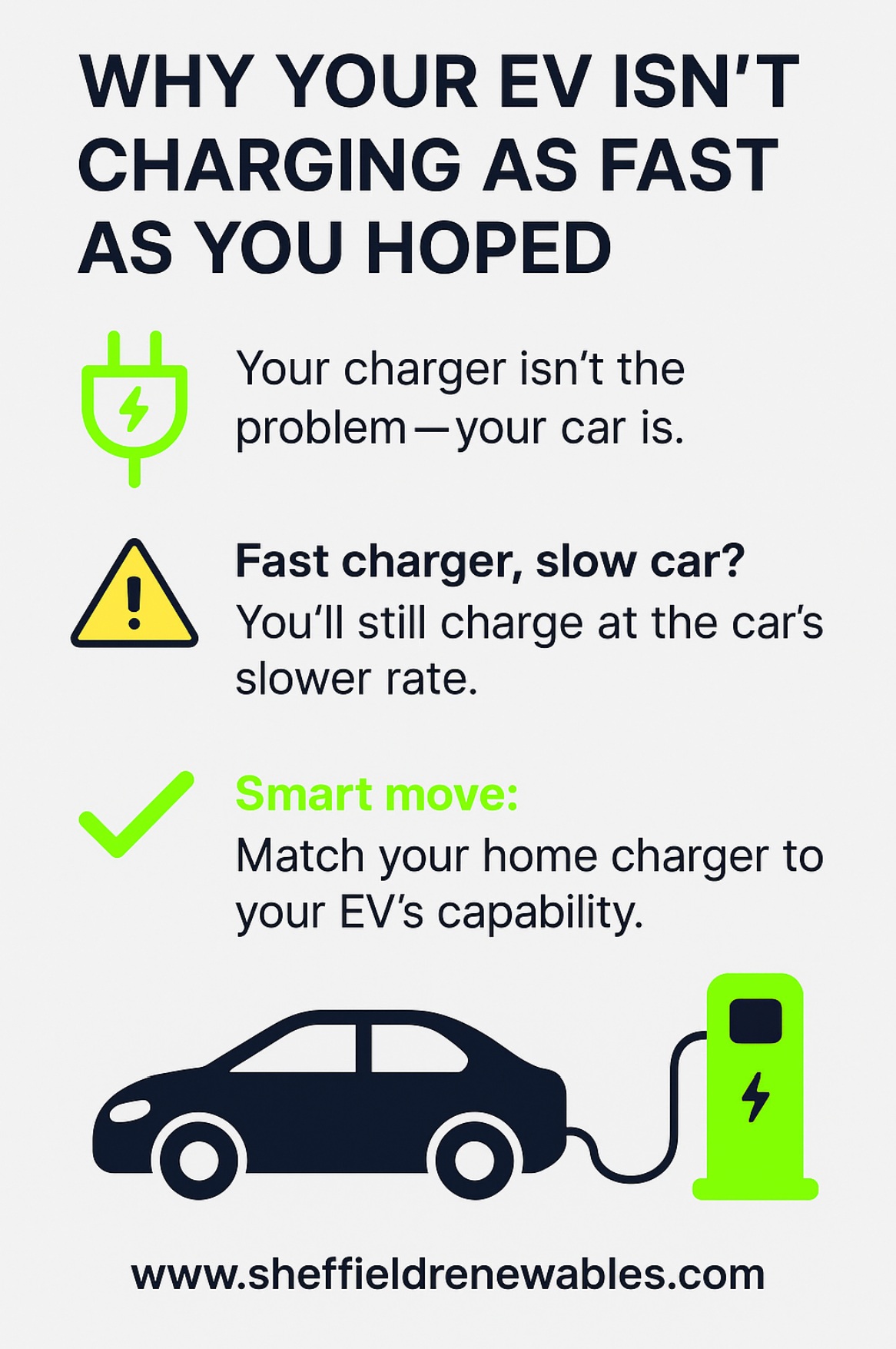
Let’s break it down with real examples:
If you install a fancy 7kW home charger but your car only has a 3.7kW onboard charger, you’ll never charge faster than 3.7kW at home. That powerful wall box simply can’t push more electricity through than your car will accept.
Similarly, if you plug into an 11kW public AC charger with a vehicle containing a 7kW onboard charger, your effective charging rate remains capped at 7kW.
This matters tremendously in the UK, where about 93% of EV drivers have access to home charging, and 90% regularly charge overnight. Since most of your charging happens at home through AC, your onboard charger capacity defines your daily charging experience.
For a typical 60kWh battery, charging from empty to full might take:
- With a 3.7kW onboard charger: approximately 16 hours
- With a 7kW onboard charger: approximately 8.5 hours
- With an 11kW onboard charger: approximately 5.5 hours
That’s why many EV owners wonder why their charging seems slower than advertised. The limiting factor isn’t the charging station but what’s inside their vehicle.
AC vs DC Charging
To understand the full picture, we need to distinguish between AC and DC charging systems.
When you charge at home or at many public stations, you’re using AC charging. This method relies entirely on your car’s onboard charger to convert AC to DC, creating the bottleneck we’ve discussed.
Think of AC charging like pouring water through a funnel. No matter how quickly you pour, the flow is limited by the funnel’s narrow end. Your onboard charger is that funnel.
DC charging works differently. These are the rapid chargers you find at service stations and dedicated charging hubs. They bypass your onboard charger completely, delivering DC electricity directly to your battery. This removes the conversion bottleneck, allowing for much faster charging.
To compare speeds:
- AC charging: typically 3.7-22kW
- DC charging: 50-350kW
UK charging infrastructure reflects this split, with about 57% of public charging points being slower AC units (3-8kW), 20% rapid chargers (≥50kW), and 10% ultra-rapid (≥150kW).
AC charging is perfect for overnight home charging or when parked for several hours. DC rapid charging shines during longer journeys when you need a quick top-up to continue driving.
Choosing the Right EV Charger for Your Setup
Matching your home charger to your car’s capabilities saves both money and disappointment. Here’s how to make smart choices:
First, check your vehicle’s specifications to find your onboard charger’s maximum AC charging rate. This information is in your owner’s manual or the manufacturer’s website.
Next, consider your typical daily driving distance. Most UK drivers travel less than 30 miles daily, requiring only 8-10kWh of electricity, easily replenished overnight even with a slower charger.
There’s often little benefit in paying extra for a 22kW home charger if your car can only accept 7kW. However, future-proofing makes sense if you plan to upgrade your vehicle in the coming years.
Here’s a simple comparison table to help you decide:
| Your Car’s Onboard Charger | Recommended Home Charger | Effective Charging Speed | Charging Time (60kWh battery, 20–80%) |
|---|---|---|---|
| 3.7kW | 3.7kW or 7kW | 3.7kW | ~10 hours |
| 7kW | 7kW | 7kW | ~5 hours |
| 11kW | 11kW | 11kW | ~3 hours |
| 22kW | 22kW | 22kW | ~1.5 hours |
Another important consideration is your home’s electrical supply. Most UK homes have single-phase electricity, which typically limits charger installation to 7kW. Upgrading to a three-phase supply for faster charging requires significant electrical work and expense.
With 84.3% of UK EV drivers either owning or planning to install home chargers, getting the right setup for your specific needs is crucial. Our professional EV charger installation team can help assess your home’s electrical capacity and recommend the optimal solution.
Conclusion
Investing in the right home charging solution saves money and ensures convenient, efficient charging. Our team specialises in home EV charger installations tailored to your specific vehicle and electrical setup. We’ll help you navigate the technical aspects and install the perfect charging solution for your needs.
Frequently Asked Questions
Why is my EV charging slower than the advertised speed of my home charger?
Your car’s onboard charger is likely the limiting factor. If your home charger is rated at 7kW but your car’s onboard charger maxes out at 3.7kW, you’ll only charge at 3.7kW. Check your vehicle specifications to confirm its maximum AC charging capacity.
Do all electric vehicles have onboard chargers?
Yes, all production EVs have onboard chargers. They’re essential for AC charging, which is the most common charging method at homes and many public locations. The capacity varies significantly between models and manufacturers.
Can I upgrade my car’s onboard charger after purchase?
Unfortunately, in most vehicles, the onboard charger isn’t designed to be upgraded. It’s an integrated component selected during manufacturing. When buying a new EV, pay attention to the onboard charger specification if faster AC charging is important to you.
Will using a DC fast charger help if my onboard charger is slow?
Absolutely. DC fast chargers bypass your onboard charger completely, delivering power directly to your battery. Even if your car has a modest 3.7kW onboard charger, it can still accept rapid DC charging at much higher rates, typically 50kW or more, depending on your vehicle model.
Is fast charging harmful to my battery in the long term?
Occasional DC fast charging shouldn’t significantly harm modern EV batteries. Most manufacturers design their battery management systems to protect the cells. However, exclusively using DC fast charging might accelerate battery degradation compared to regular AC charging. For daily use, home AC charging remains the gentler option for your battery.
Sources