


Installing solar panels helps landlords meet 2030 EPC C requirements while generating significant returns. Systems cost £4,500-£10,000 with 10-year paybacks, add 6-10 EPC points, and qualify for grants including 0% VAT and export payments.

The clock is ticking for UK landlords. By 2030, all rental properties must achieve an Energy Performance Certificate (EPC) rating of C or above. Currently, the legal minimum standard is EPC E. With over half of private rental homes falling below the future standard, landlords face a critical challenge. Solar PV offers a powerful solution to boost EPC ratings while providing long-term benefits for both property owners and tenants.
Key Takeaways
- Landlords must upgrade rental properties to EPC C by 2030, with solar PV offering a reliable 6-10 point boost to meet compliance requirements.
- Solar installation costs range from £4,500-£10,000, with typical payback periods of 10 years and systems lasting 25+ years for long-term returns.
- Financial incentives include 0% VAT until 2027, export payments through the Smart Export Guarantee, and potential grants for qualifying properties.
What Are the New EPC Rules for Landlords?
Currently, it’s unlawful to let most domestic properties with an EPC rating below E in England and Wales under the 2015 MEES Regulations, with limited exemptions. Local authorities can impose financial penalties for non-compliance.
Looking ahead, the UK Government has consulted on raising the Private Rented Sector minimum to EPC C. The timeline follows a phased approach:
- April 2028: All new tenancies must meet EPC C standards
- April 2030: All existing tenancies must comply
The challenge is significant. England’s PRS comprises approximately 5.1 million homes, with an estimated 55% currently below EPC C. Fuel poverty affects around 24% of private rented households, the highest rate among all housing tenures.
Under the proposed changes, penalties for non-compliance could increase dramatically from the current £5,000 maximum to £30,000 per property per breach. This represents a serious financial risk for landlords who fail to act.
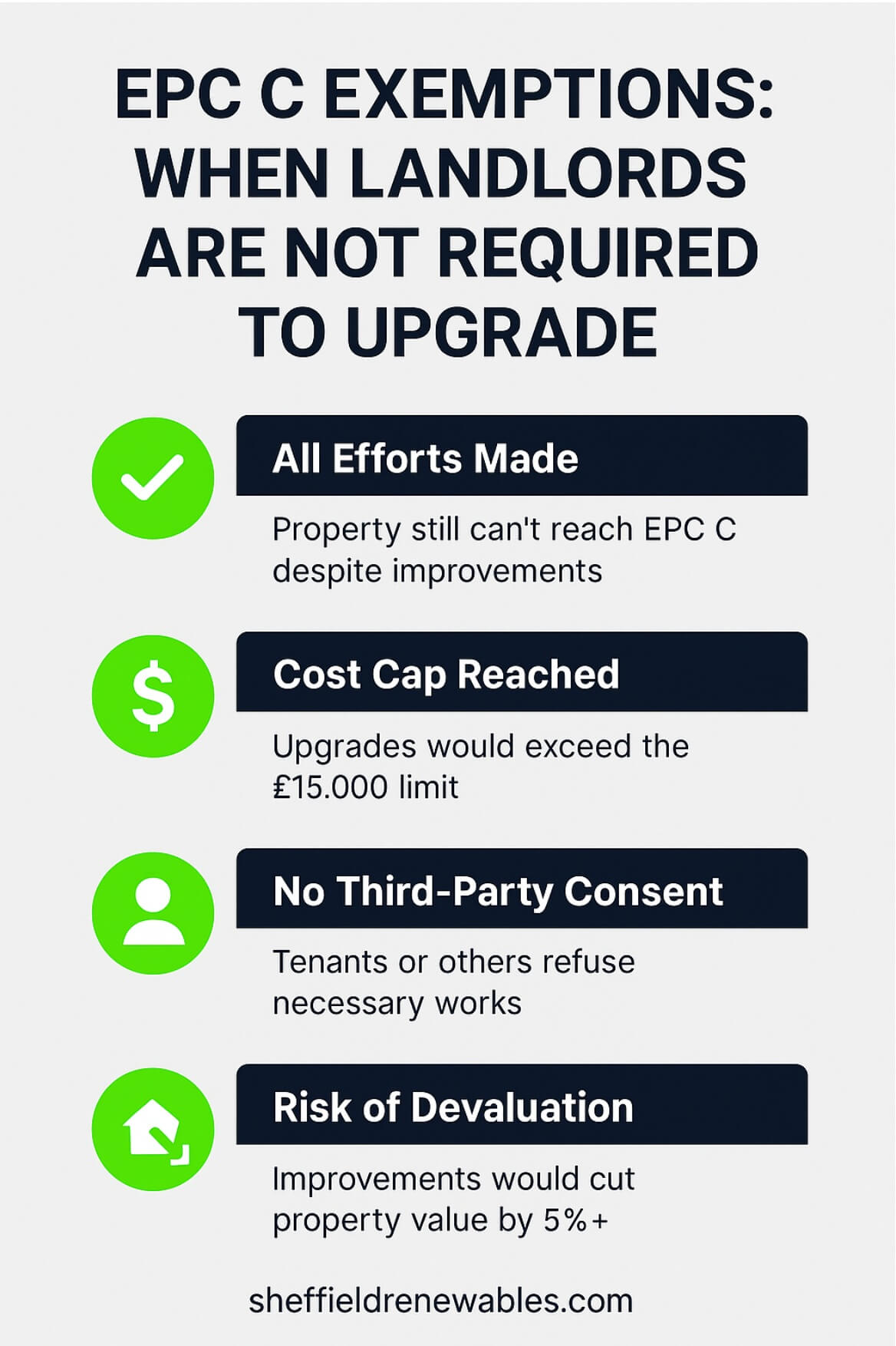
The government has also proposed a £15,000 per-property cost cap, meaning landlords would only be required to make improvements up to this threshold. If a property cannot reach EPC C within this budget, an exemption may be registered.
How Solar PV Helps Landlords Improve EPC Ratings
Solar photovoltaic systems offer landlords a powerful tool to boost EPC ratings. The EPC methodology (SAP) directly rewards measures that reduce annual energy use and emissions. Solar PV fits perfectly into this framework.
EPC Points Boost
A well-designed solar PV system typically adds 6-10 points to a property’s SAP score. This could be the difference between a stubborn D rating and achieving the required C.
The effectiveness varies based on several factors:
| Factor | Impact on EPC Improvement |
|---|---|
| System size | Larger systems (3-5kWp) provide greater improvements |
| Property heating type | Electrically heated properties see larger gains |
| Existing efficiency | Properties with good insulation maximise benefits |
| Orientation | South-facing, unshaded roofs yield the best results |
Solar PV delivers particularly strong results when paired with good fabric measures like insulation and efficient heating controls. For properties hovering just below the C threshold, solar can provide that final push needed for compliance.
Benefits Beyond EPC Ratings
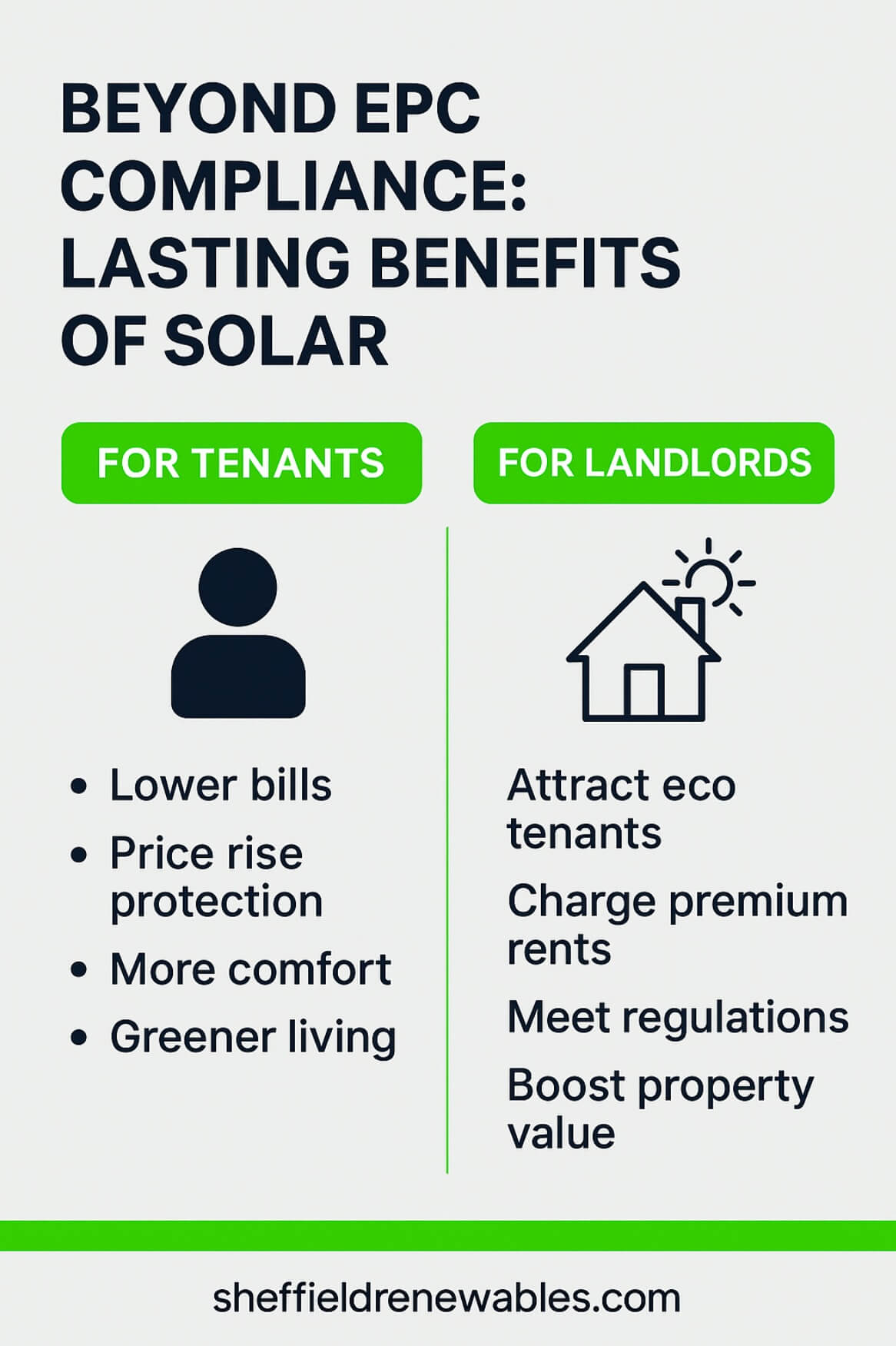
Government modelling specifically includes solar PV in the package of cost-effective measures for upgrading rental properties to meet the new standards.
Solar Panel Installation Costs and Payback for Landlords
Understanding the financial aspects of solar investment helps landlords make informed decisions. Current installation costs have decreased from their 2022-23 peaks.
Typical Installation Costs
| System Size | Typical Cost Range | Suitable For |
|---|---|---|
| 3kW | £4,500 - £6,000 | 2-3 bedroom house |
| 4kW | £6,000 - £8,000 | 3-4 bedroom house |
| 6kW | £8,000 - £10,000 | Larger property |
Payback Period Analysis
A standard 3.6kW solar system on a south-facing roof can generate approximately 3,400 kWh of electricity annually. With current electricity prices around 26p/kWh, this translates to significant savings.
Let’s break down a typical scenario:
- 50% self-consumed electricity: £442 annual savings
- 50% exported electricity at 10p/kWh SEG rate: £170 annual income
- Total annual benefit: £612
- System cost: £6,500
- Simple payback period: 10.6 years
With energy prices expected to rise over time, actual paybacks could be faster. Plus, solar panels typically last 25+ years, providing over a decade of pure profit after the initial investment is recouped.
Landlord-Tenant Arrangements
For landlords whose tenants pay the electricity bills, several approaches can ensure you also benefit:
- Include electricity in rent (at a premium that reflects some solar savings)
- Promote the property’s lower running costs to justify slightly higher rent
- Market the property as a “green premium” offering with enhanced comfort
These approaches are increasingly common in the professional rental sector, recognising that energy-efficient homes command better returns.
Grants, Funding Schemes and Exemptions
Several financial incentives can help offset your solar investment:
- 0% VAT on installations: Solar panel installations in residential accommodation benefit from zero-rated VAT until March 31, 2027 (after which it’s scheduled to revert to 5%). This tax break also applies to electrical storage batteries from February 2024.
- Smart Export Guarantee (SEG): All licensed electricity suppliers must pay for solar electricity exported to the grid. Rates vary significantly between suppliers, from around 5p to 15p per kWh, so shopping around is worthwhile. To qualify, your system needs MCS certification and appropriate export metering.
- Energy Company Obligation (ECO4): Available until March 2026, this scheme provides funding for low-income and vulnerable households, including those in private rental properties. Eligibility depends on tenant circumstances and property criteria.
- Great British Insulation Scheme: Running until March 2026, this area-based scheme prioritises low-cost insulation for properties in lower council tax bands or with low-income residents. It works particularly well when paired with solar PV to efficiently improve EPC ratings.
Our professional solar installations ensure you maximise available incentives while meeting all compliance requirements for EPC improvements.
Quick Tips for Landlords to Reach EPC C with Solar
- Get an up-to-date EPC assessment. Many older EPCs use outdated methodology. A fresh assessment will give you the most accurate starting point and specific recommendations.
- Calculate your EPC point gap. Know exactly how many SAP points you need to reach band C (69 points), then identify the most cost-effective measures to close that gap.
- Do fabric first where possible. Low-cost improvements like loft insulation and draught-proofing often provide the cheapest EPC uplift per pound spent. Then add solar to push stubborn properties over the threshold.
- Act early to avoid the 2030 rush. As the deadline approaches, installer availability will decrease, and costs may rise due to demand. Early adopters will benefit from current incentives and avoid this crunch.
Conclusion
Solar PV offers landlords a powerful tool to meet the 2030 EPC C requirements while improving property values and rental appeal. With current incentives, dropping installation costs, and rising energy prices, the business case is compelling. Don’t wait until the deadline approaches and prices potentially rise. Contact us today for a solar quote that maps your exact path to compliance.
FAQ
What are the new EPC rules for landlords?
Landlords must ensure rental properties reach EPC band C by 2030, with new tenancies requiring compliance by 2028. The current minimum standard is EPC E. Proposed regulations include a £15,000 cost cap and penalties up to £30,000 for non-compliance.
What is the deadline for EPC C compliance?
The proposed deadlines are April 2028 for new tenancies and April 2030 for all existing tenancies. These dates follow the government consultation completed in 2025, though final confirmation is pending.
How much can solar PV improve my EPC rating?
Solar PV typically adds 5-15 points to an EPC score, potentially increasing the rating by one full band. The improvement is greatest for electrically-heated properties or homes with high electricity usage, especially when combined with good insulation.
Are there grants available for landlords to meet EPC rules?
Yes. Landlords can benefit from 0% VAT on solar installations until March 2027, Smart Export Guarantee payments, and potentially ECO4 funding if tenants meet eligibility criteria. Additional schemes like the Great British Insulation Scheme may also help with complementary measures.
Does adding solar panels increase rental property value?
Yes. Research indicates solar panels can increase property values by approximately 4-6%. They also enhance rental appeal through reduced bills, making properties more attractive to environmentally-conscious tenants and potentially supporting higher rents or reducing vacancy periods.