
Quick Answer: Quick answer: Over 10–20 years, solar panels are usually cheaper than grid electricity, with typical payback in 10–21 years and decades of low-cost power after installation.
Solar panels cost more upfront, but over 10–20 years they usually work out cheaper than staying on the grid. We’re talking real numbers, UK data, and what actually happens to your energy bills. We’ll show you the typical payback periods and what determines whether solar makes financial sense for your household.
Key Takeaways
- Residential solar power costs roughly 14.9p/kWh compared to grid electricity at 17.08p/kWh, with large-scale solar even cheaper at 4.1p/kWh.
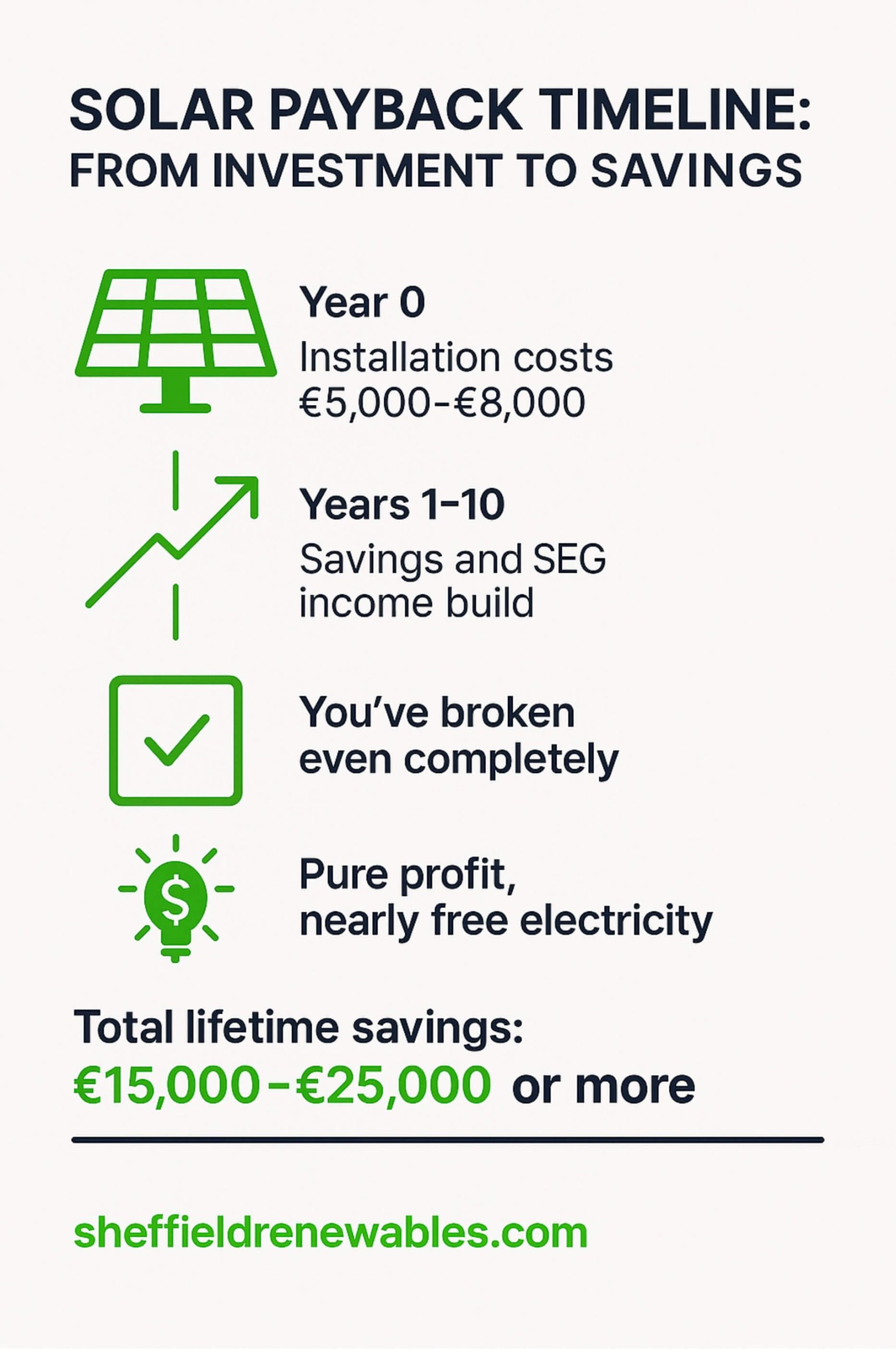
- UK solar systems typically pay for themselves in 10–21 years, then provide decades of near-free electricity from panels lasting 25–30+ years.
- The Smart Export Guarantee lets you sell surplus power back to the grid, with £56.97 million paid to generators in 2024–25 alone.
How Much Does Solar Power Really Cost Per kWh in the UK?
Let’s start with the numbers that matter. When energy experts talk about the true cost of electricity, they use something called LCOE, or levelised cost of electricity. Think of it as the lifetime cost per kilowatt-hour once you factor in installation, maintenance, and how long the system lasts.
According to UK government data and cost estimates, large-scale solar farms have among the lowest generation costs of any electricity source, with utility-scale solar LCOE currently around £41 per MWh (approximately 4.1 p per kWh), meaning very low costs for large projects.
For small rooftop solar systems — the kind installed on homes — research estimates a typical lifetime levelized cost of electricity (LCOE) of about £149 per MWh (approximately 14.9 p per kWh), although this can vary with system size, installation costs, and generation profile.
By comparison, average UK residential electricity prices under the energy price cap are around 26–27 p per kWh, reflecting what households typically pay for grid electricity.
So residential solar still undercuts what you’re paying the grid.
| Solar Type | Cost per kWh (LCOE) | Notes |
|---|---|---|
| Large-scale solar farms | 4.1p | Government infrastructure projects |
| Small residential systems | 14.9p | Typical home installation |
| UK grid retail electricity | 17.08p | What you currently pay |
Grid Electricity Costs and Why They Keep Rising
According to the National Audit Office’s review of UK energy bill support schemes, domestic electricity prices surged during the 2022 energy market crisis and remain significantly above pre-crisis levels due to continued wholesale price pressures.
Over recent years, UK energy prices have been on a proper rollercoaster. The 2022 energy crisis sent bills soaring, and whilst they’ve stabilised somewhat, they remain significantly higher than pre-crisis levels.
Standing charges add insult to injury. You’re paying daily fees just to stay connected, whether you use electricity or not. Solar doesn’t eliminate these network costs entirely, but it dramatically reduces how much grid electricity you actually need to buy.
The Real Payback Period for Solar Panels in the UK
Everyone bangs on about going solar, but how long till it truly pays for itself?
Typical Payback Range and What Affects It
Most UK households see their solar investment pay for itself within 10 to 21 years. That’s quite a range, so what makes the difference? Here’s what affects your payback timeline:
- Larger systems cost less per kilowatt
- Typical homes need 3kW to 4kW
- South-facing roofs generate more electricity
- Northern homes produce around 850 kWh yearly
- Southern regions exceed 1,000 kWh per kWp
- Self-consumption saves the most money
- Batteries boost usage to 60–80 percent
- Rising electricity prices accelerate payback time
Finally, rising retail electricity prices actually speed up your payback. The more expensive grid electricity becomes, the more valuable each kilowatt-hour you generate yourself.
What Happens After Payback? Years of Near-Free Electricity
Solar panels don’t pack up and retire once they’ve paid for themselves.
Quality panels typically last 25 to 30 years, with some still producing power well beyond that. They degrade slowly, losing perhaps 0.5% efficiency per year.
Once you’ve hit payback at year 10 to 21, you’ve potentially got another 10 to 15 years of virtually free electricity ahead. Apart from minimal maintenance and maybe one inverter replacement, your running costs are negligible. This is where solar’s long-term value really compounds.
Smart Export Guarantee (SEG) and Selling Surplus Power
The Smart Export Guarantee requires UK energy suppliers to pay you for the solar electricity you export to the grid. It’s not optional for larger suppliers, and it puts money back in your pocket.
Recent Ofgem data shows that SEG generators received £56.97 million in payments during 2024–25, with 443.1 gigawatt-hours exported to the grid. Those numbers are growing steadily as more households install solar.
Export rates vary wildly between suppliers. Some offer fixed tariffs around 4–5p per kWh. Others pay market rates that fluctuate with wholesale prices, sometimes reaching 15p or more during peak demand.
Great News: Every kilowatt-hour you export is money you wouldn't see otherwise.
Solar Energy vs Electricity from the Grid Over 10 and 20 Years
Let’s take an example of a typical UK household with a 3.5kWp solar system, annual consumption of 3,500 kWh, and 40% self-consumption without batteries.
Over ten years, you’ll generate roughly 35,000 kWh. With 40% self-consumption, you use 14,000 kWh of your own solar power directly, avoiding grid purchases worth approximately £2,380 at current prices. The remaining 21,000 kWh gets exported, earning perhaps £1,050 at a conservative 5p per kWh SEG rate.
Total ten-year benefit: around £3,430.
Now extend that to twenty years. Your panels keep generating another 35,000 kWh. That’s another £2,380 in avoided purchases and £1,050 in exports, assuming prices stay flat (they won’t).
| Scenario | 10-Year Total | 20-Year Total | Notes |
|---|---|---|---|
| Solar system (3.5kWp) | £3,430 benefit | £8,000+ benefit | After £7,000 initial cost; pure profit from year 11 onwards |
| Grid electricity only | £5,950 spent | £13,000+ spent | Assumes conservative 2% annual price growth |
Beyond the money, you’ve also cut your carbon footprint substantially, gained energy independence, and potentially added value to your property. We design and install solar systems tailored to your home’s energy needs and budget, helping you calculate your exact payback period based on your household usage.
How Battery Storage Can Maximise Your Solar Savings
Battery storage is basically the missing piece of the puzzle when it comes to squeezing every last bit of value out of your solar panels.
The big issue is simple. Panels do their best work while most of us are out and about, not when we’re home using the kettle, telly, and everything else. So without a battery, you end up flogging your spare energy to the grid for pennies, then buying it back in the evening for four times the price.
A battery flips that on its head.
It stores your daytime surplus so you can use it later, boosting your self-use massively and saving you proper money. Yes, they cost a few grand, but the payback and peace of mind can be well worth it.
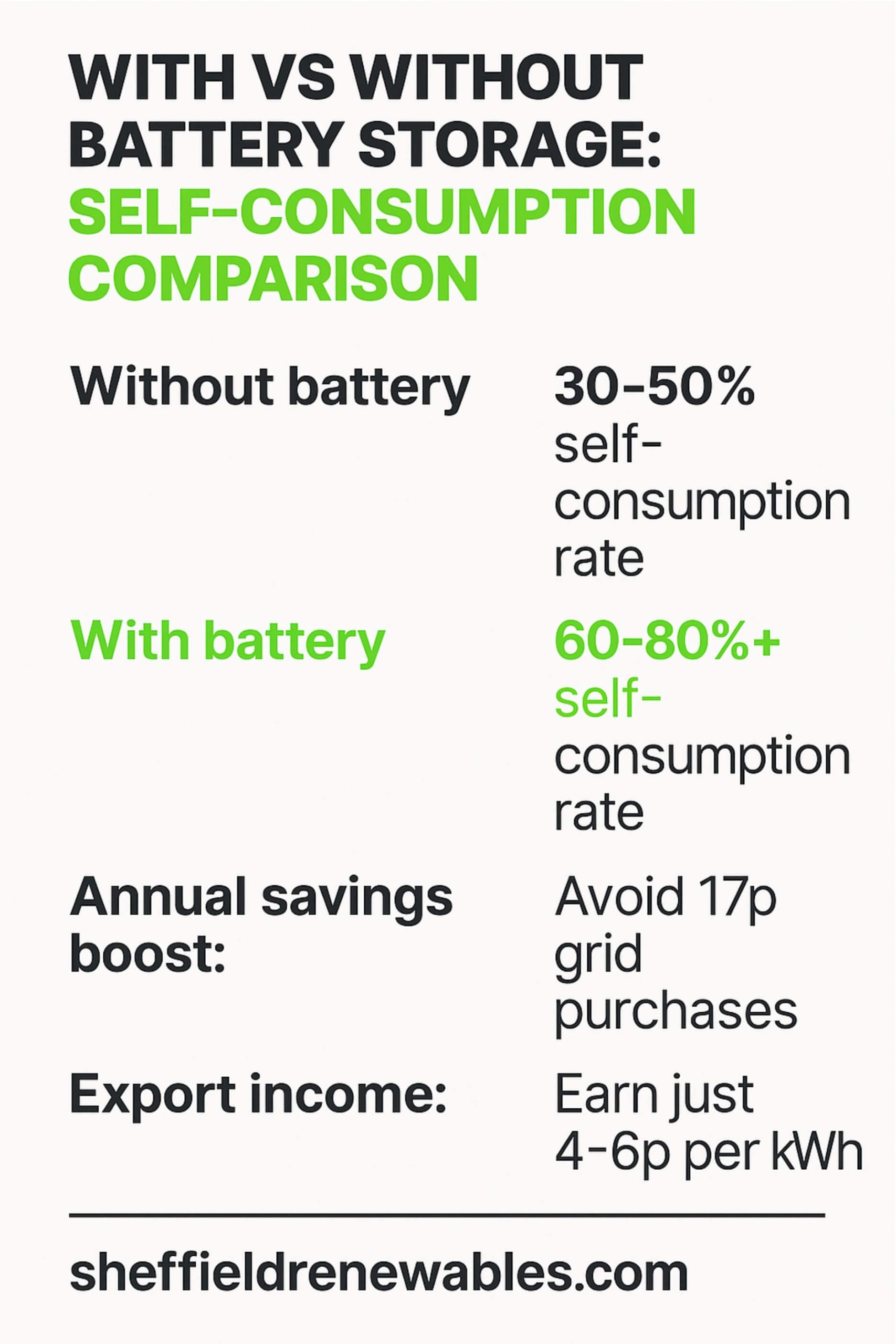
Our battery systems integrate seamlessly with your solar panels through our battery storage solutions, helping you store and use more of your solar energy rather than exporting it cheaply and buying it back expensively.
It’s like having your own mini power station.
Key Factors That Determine Whether Solar Beats Grid Electricity for Your Home
Not every home sees the same savings.
System size makes a big difference. Many of those houses suit a 3–4kW setup covering roughly half their yearly usage.
Your roof and location matter too.
South-facing is ideal, but even up north you can still make it work if you avoid shading. How and when you use electricity is key; if you’re out all day, batteries help boost self-consumption.
Paying upfront usually gives the best returns, though finance can get you started sooner. SEG export rates and planning rules also influence the numbers. And whatever you do, always use an MCS-certified installer.
Conclusion
The figures make it pretty clear: solar usually beats grid electricity over 10–20 years.
Once you hit payback, you’re looking at a decade or more of cheap, reliable power. Savings depend on system size, roof, usage, and SEG rates, but with rising energy prices, solar’s hard to ignore for long-term value.
Contact us today for a free, no-obligation solar assessment, tailored to your home and energy usage. We’ll calculate your exact payback period, potential savings, and design a system that fits your budget and goals.
FAQs
Is solar power cheaper than grid electricity in the UK?
Yes. Over 10–20 years, solar usually works out cheaper. With grid prices around 17p/kWh and residential solar costing roughly 15p/kWh over its lifetime, you save by using your own energy and earning SEG payments.
How long does it take for solar panels to pay for themselves?
UK systems typically pay back in 10–21 years, depending on system size, roof orientation, usage patterns, and electricity prices. After payback, panels continue generating for another decade or more with very low running costs.
What is the cost per kWh for solar power compared to the grid?
Small residential systems average 14.9p/kWh, while larger setups can drop to around 5p/kWh, compared to the grid at 17.08p/kWh.
Can I sell excess solar electricity back to the grid?
Yes. SEG lets you earn 4–15p/kWh, and UK households received nearly £57m in payments during 2024–25.
Do solar panels increase property value?
Often, yes. Lower bills and better energy efficiency appeal to many buyers.